
MLC election process: The Essential Guide to Vidhan Parishad Seats
Curious about the Vidhan Parishad? Decode the MLC election process to understand exactly who casts a vote and how these upper house seats are filled.
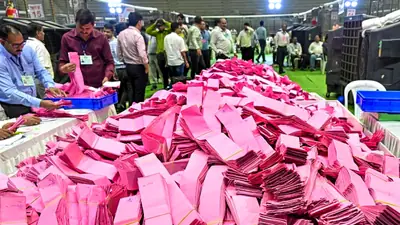
Understanding the mlc election process is essential for grasping how state governance functions in a bicameral legislature. The Vidhan Parishad, or legislative council, serves as the state upper house elections target for citizens interested in regional parliamentary representation. This system ensures that diverse societal voices contribute to the law-making process.
Understanding the MLC Election Process
The vidhan parishad explained concept centers on a unique representation model. Unlike the directly elected assembly, the council draws members from various professional and academic backgrounds. The mlc election process functions through an indirect voting system rather than a universal adult suffrage model.
Legislators in this chamber represent specific groups within the state. Because of this, the legislative council voting rules differ significantly from those used in general assembly polls. These rules ensure that teachers, graduates, and local authorities maintain a voice in legislative matters.
How MLC Seats Are Filled
Several distinct categories determine how mlc seats are filled across the state. Each category follows a specific quota to ensure balanced representation. Understanding the mlc election process requires looking at these specific nomination and election quotas:
- One-third of members are elected by the state's legislative assembly members.
- One-third are chosen by local bodies like municipalities and district boards.
- One-twelfth are elected by registered graduates residing in the state.
- One-twelfth are elected by teachers serving in educational institutions.
- The remaining one-sixth are nominated by the Governor for their contributions.
This complex structure ensures that the mlc election process remains inclusive of experts and grassroots leaders. By utilizing a bicameral legislature voting system, the state balances executive power with specialized knowledge. Every participant in the mlc election process plays a vital role in upholding democratic checks and balances.
The Dynamics of State Upper House Elections
The mlc election process relies heavily on the single transferable vote system. This method allows voters to rank candidates by preference rather than choosing just one. Consequently, state upper house elections focus on consensus rather than simple majorities.
The mlc election process effectively isolates the council from the immediate pressures of general politics. By staggering terms, the council ensures stability and continuity in legislative debates. Each seat filled through this method strengthens the democratic framework of the state.
In conclusion, the structure of the legislative council ensures that experts and local representatives help shape state policy. Through the mlc election process, the system provides a platform for diverse perspectives that might otherwise be overlooked. These institutions remain a cornerstone of effective regional governance.
More updates
Follow the latest India news and related coverage.
What's Your Reaction?
 Like
0
 Dislike
0
 Love
0
 Funny
0
 Wow
0
 Sad
0
 Angry
0

Rina Chatterjee covers health, medicine and wellness with a focus on reliable, easy-to-understand information. She works to separate fact from rumor and helps readers make informed choices about their well-being. Her articles are carefully researched and written with empathy.






Comments (0)