
10 Big Firsts of Vikram-1 and Mission Aagaman
From India's first private orbital rocket to a lab-grown diamond in space, here are 10 milestones Skyroot Aerospace's Vikram-1 mission is attempting to achieve.

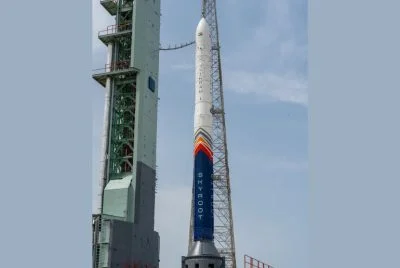
SRIHARIKOTA, ANDHRA PRADESH — Skyroot Aerospace's Vikram-1 mission isn't just another rocket launch — it's designed to notch a string of firsts for India's space industry. Here are 10 milestones riding on today's flight.
1. India's First Private Orbital Rocket
Vikram-1 is the first orbital-class launch vehicle designed, built and integrated entirely by an Indian private company, without relying on a government-developed rocket or launch schedule.
2. First All-Carbon Composite Orbital Rocket Built in India
The 24-metre vehicle uses a lightweight, all-carbon composite airframe — a first for an Indian orbital-class launch vehicle, chosen to cut weight and speed up manufacturing.
3. First Indian Orbital Rocket With 3D-Printed Engines
Vikram-1's solid and liquid propulsion systems include 3D-printed components, a manufacturing approach aimed at faster production and lower costs than traditional engine-building methods.
4. First Attempt by a Private Indian Company to Reach Orbit
Skyroot's 2022 Vikram-S flight reached space but was suborbital. Vikram-1 marks the company's — and India's private sector's — first attempt to actually place a payload into orbit.
5. First Time a PM's Handwritten Note Has Flown to Space From India
Prime Minister Narendra Modi's handwritten postcard reading "Vande Mataram" is flying aboard as a symbolic payload, alongside notes from Skyroot's team, investors and policymakers.
6. First Lab-Grown Diamond Payload on an Indian Rocket
Among the mission's payloads is a lab-grown diamond, a novel addition for an Indian orbital launch and a nod to the growing range of commercial and artistic payloads riding alongside satellites.
7. First Art Payload: "Cosmic Bloom"
The mission also carries "Cosmic Bloom," an artwork from Cosmos Diamonds, alongside a micro-art payload — an unusual first for a launch built primarily around technology demonstration.
8. First Indian Small-Lift Vehicle Aimed at the Global Market
Unlike ISRO's PSLV, built for government and larger payloads, Vikram-1 is designed specifically for the global small-satellite launch market, positioning India's private sector as a commercial competitor abroad rather than just a domestic alternative.
9. First Indian Private Rocket Named After Vikram Sarabhai to Reach This Stage
Vikram-1 carries forward the naming tradition honoring Vikram Sarabhai, widely regarded as the father of India's space programme, marking the most advanced vehicle yet to bear his name from the private sector.
10. First Real Test of India's 2020 Space Reforms at Full Scale
The mission is the most significant test yet of India's 2020 space-sector liberalization and the 2023 Indian Space Policy, which opened orbital launch capability to private companies — making Vikram-1's outcome a bellwether for whether those reforms can produce a fully independent commercial launch provider.
What's Your Reaction?
 Like
0
Like
0
 Dislike
0
Dislike
0
 Love
0
Love
0
 Funny
0
Funny
0
 Wow
0
Wow
0
 Sad
0
Sad
0
 Angry
0
Angry
0









Comments (0)