
Kerala assembly resolution: Breaking demand to remove CEC Kumar
The Kerala assembly resolution demands the ouster of CEC Gyanesh Kumar, citing serious irregularities found in the Special Intensive Revision process.
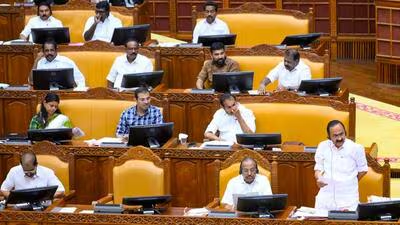
Legislative Push: Kerala Demands Accountability in Election Oversight
The kerala assembly resolution marks a significant shift in state-level oversight of federal democratic processes. Legislators formally expressed deep concerns regarding the current leadership of the national election body. This kerala assembly resolution underscores a growing friction between regional governance and central electoral authorities.
Concerns Regarding the Kerala Assembly Resolution
The kerala legislative assembly held a focused debate on the conduct of high-ranking officials. Members emphasized the necessity for transparency within the election commission controversy. By passing the kerala assembly resolution, the house signaled its intent to hold constitutional bodies accountable.
Legislators pointed to specific administrative failures during recent electoral preparations. They argued that the gyanesh kumar cec tenure has been marked by a lack of impartiality. Consequently, the kerala assembly resolution serves as a formal legislative grievance against the status quo.
Addressing the Special Intensive Revision Irregularities
A primary driver behind this move involves the special intensive revision irregularities identified by state observers. Officials claimed that these process errors compromised the integrity of voter rolls. The following points summarize the core issues addressed in the kerala assembly resolution:
- Documented gaps in the special intensive revision irregularities reporting.
- Persistent failures to rectify erroneous entries in the database.
- A perceived lack of responsiveness from the central administration.
These points form the backbone of the cec ouster demand currently circulating among the assembly members. Critics believe that such administrative lapses undermine the democratic foundation of the state.
Implications of the CEC Ouster Demand
The cec ouster demand represents a rare instance of state-level legislative intervention in federal appointments. Supporters of the motion insist that the current election commission controversy necessitates a change in leadership. They argue that the gyanesh kumar cec appointment failed to meet expectations regarding procedural fairness.
Proponents of the measure suggest that the kerala assembly resolution functions as a vital democratic check. Opponents, however, query the legal weight of such a state-led mandate against a constitutional authority. Regardless of the legal outcome, the motion has sparked a nationwide conversation on electoral accountability.
The legislative house remains firm in its stance on these administrative matters. By formally adopting this measure, they seek to ensure that future electoral cycles operate without similar systemic failures.
In conclusion, the situation highlights a profound divide regarding the oversight of national election processes. The move by the assembly reflects a deep-seated frustration with current management practices. Whether this formal request will result in leadership changes remains a matter of significant public interest. The debate serves as a reminder of the constant tension between different levels of the democratic apparatus.
More updates
Follow the latest India news and related coverage.
What's Your Reaction?
 Like
0
Like
0
 Dislike
0
Dislike
0
 Love
0
Love
0
 Funny
0
Funny
0
 Wow
0
Wow
0
 Sad
0
Sad
0
 Angry
0
Angry
0

Vikram Singh is a sports journalist who has followed cricket and football from local grounds to international stadiums. His match reports and player profiles capture both the numbers and the emotion of the game. He is passionate about grassroots sport and young talent.







Comments (0)