
GST Council meeting: New reforms to accelerate refunds and cut fines
The 57th GST Council meeting introduces faster refunds and lower penalties to ease business burdens. See how these reforms simplify tax compliance.
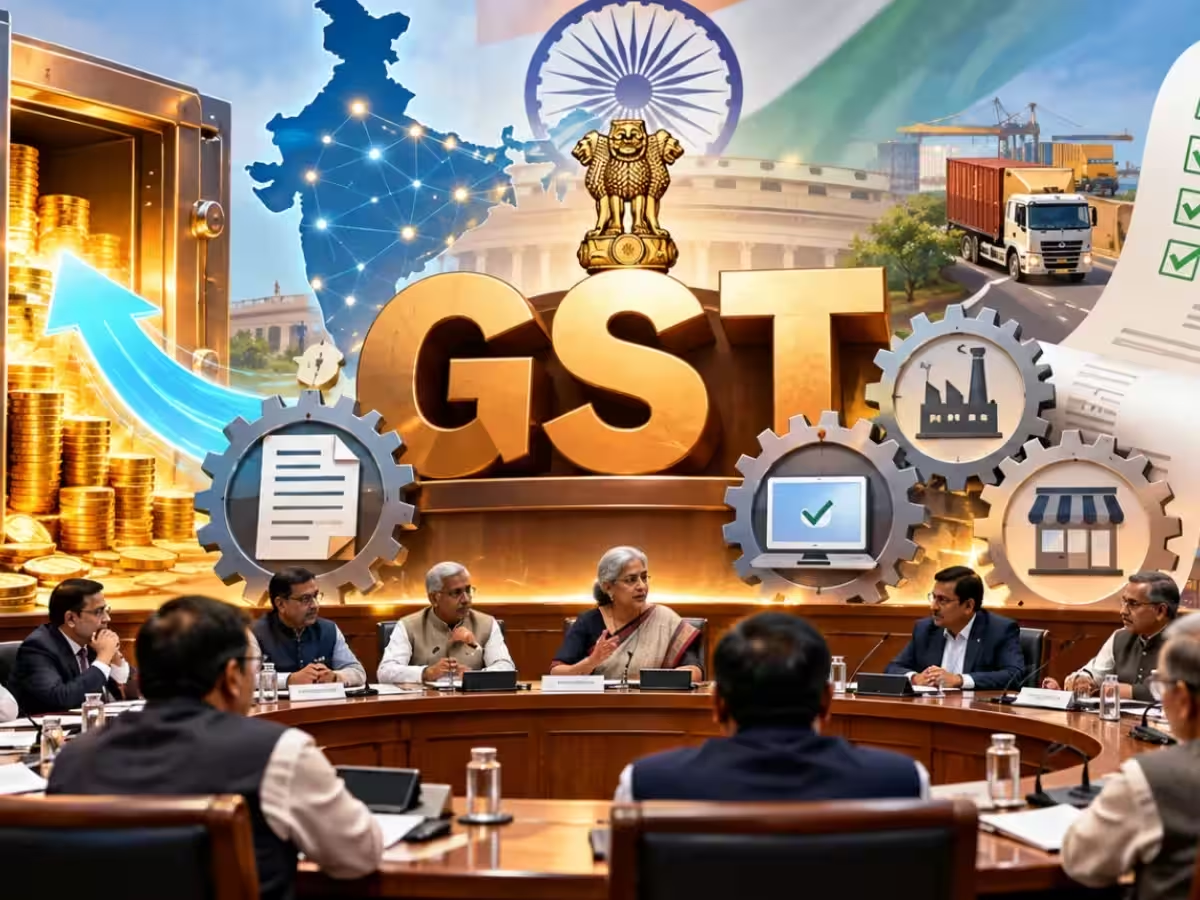
Streamlining Growth: How Recent Policy Shifts From The GST Council Meeting Aim to Support Taxpayers
The 57th gathering of officials has signaled a major shift toward supporting the commercial community through deliberate policy adjustments. During the latest session, leaders focused on easing the administrative load for taxpayers across the nation. These strategic moves aim to foster a more business-friendly environment while maintaining robust oversight. Improving the ease of doing business remains a primary objective for participants.
By prioritizing efficiency, the government hopes to reduce friction for growing enterprises. This session marks a significant step toward modernizing the indirect tax framework.
Enhancing Efficiency in the GST Refund Process
Streamlining the reimbursement workflow is a central pillar of these recent policy updates. Faster acknowledgement timelines ensure that businesses receive their funds without unnecessary bureaucratic delays. Furthermore, the introduction of provisional refunds will provide vital liquidity to eligible taxpayers.
The following measures define the new approach to liquidity management
- Implementation of expedited acknowledgement systems for all claims.
- Provision of immediate provisional refunds to maintain operational cash flow.
- Reduced waiting periods for pending claims verification.
Refining these operational procedures is a key outcome of the recent decision-making process. Businesses can now expect a more predictable timeline for capital recovery. This shift highlights how the authorities prioritize fiscal stability for the private sector.
Targeted Penalty Reduction and Compliance
A major highlight of the recent policy discussions involves comprehensive compliance reforms. Officials have recommended a significant reduction in fines to assist businesses that face minor technical errors. This approach encourages voluntary adherence to rules rather than punitive enforcement. Additionally, the council proposed an increase in the prosecution threshold.
This change protects small and medium enterprises from harsh legal consequences for unintentional oversights. By softening the enforcement stance, the regulators aim to foster trust between taxpayers and the authorities.
Resolving the Inverted Duty Structure
Addressing the inverted duty structure is essential for supporting key sectors like manufacturing and textiles. These industries have historically struggled with the accumulation of unused input tax credits. The latest policy adjustments aim to unlock this capital, allowing businesses to reinvest in their growth. This systemic correction will provide much-needed relief to production-heavy industries.
By resolving these tax imbalances, the council ensures that the cost of production remains competitive. Such changes prove that the governing body is dedicated to long-term economic sustainability.
Conclusion
The recent policy decisions reflect a commitment to balancing tax enforcement with business enablement. Through faster refunds and lower penalties, the government is actively reducing the burden on the commercial sector. These compliance reforms will likely drive greater efficiency across the entire economy. As these changes take effect, businesses can expect a more agile and supportive tax environment.
Key points: Gst Council Meeting
- 57th Gst Council: latest updates on gst council meeting.
- Tax Compliance Reforms: latest updates on gst council meeting.
- Gst Penalty Reduction: latest updates on gst council meeting.
More updates
Follow the latest Law & Gov news and related coverage.
What's Your Reaction?
 Like
0
Like
0
 Dislike
0
Dislike
0
 Love
0
Love
0
 Funny
0
Funny
0
 Wow
0
Wow
0
 Sad
0
Sad
0
 Angry
0
Angry
0

Madhuri Dutta writes about the history, art, festivals and literature of Bengal and beyond. Her stories celebrate heritage and keep traditions alive for a new generation. She has a deep love for storytelling rooted in culture.










Comments (0)