
Jantar Mantar protests: Breaking Supreme Court Challenge Filed
A new Supreme Court plea challenges the Delhi Police’s move to relocate Jantar Mantar protests to distant sites like Ramlila and Burari grounds. Read more.
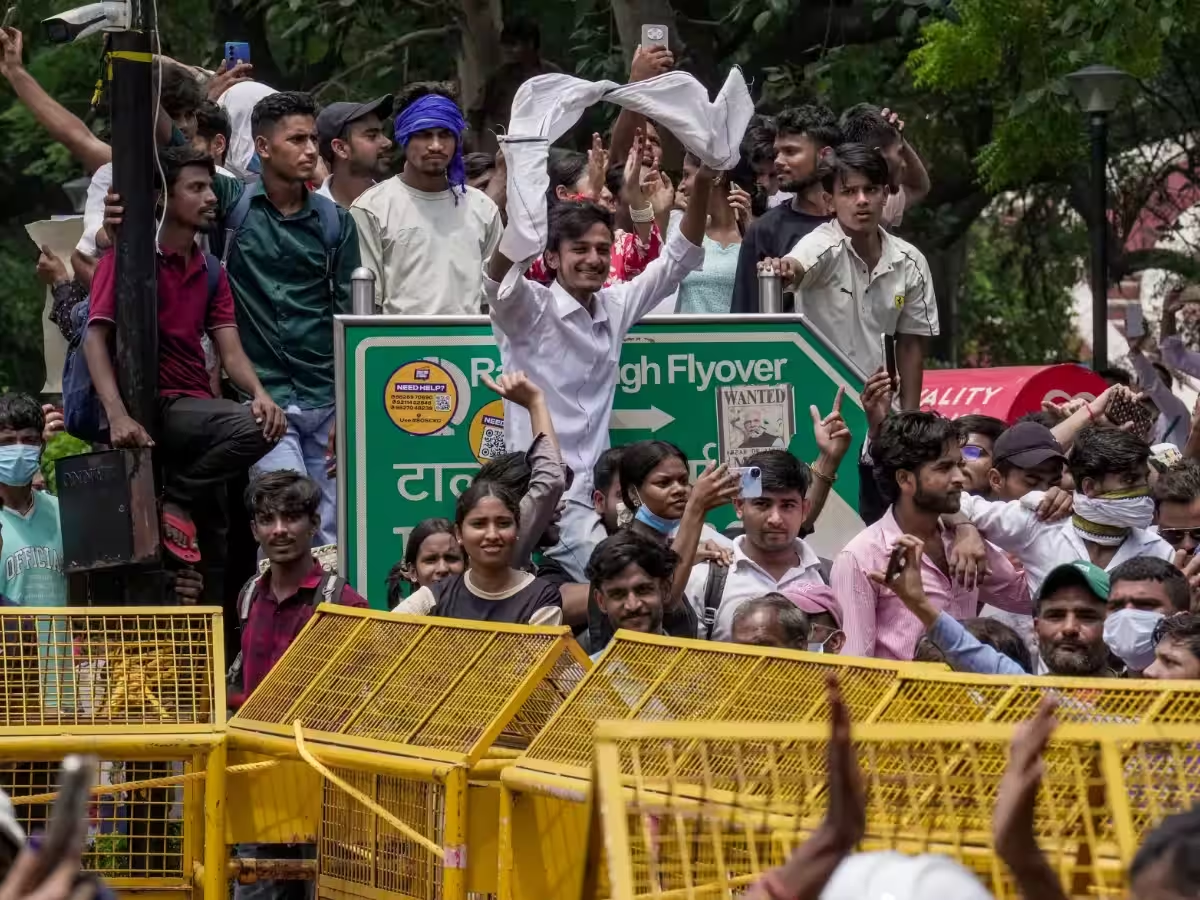
Legal Battle Over Public Assembly Rights in the Capital
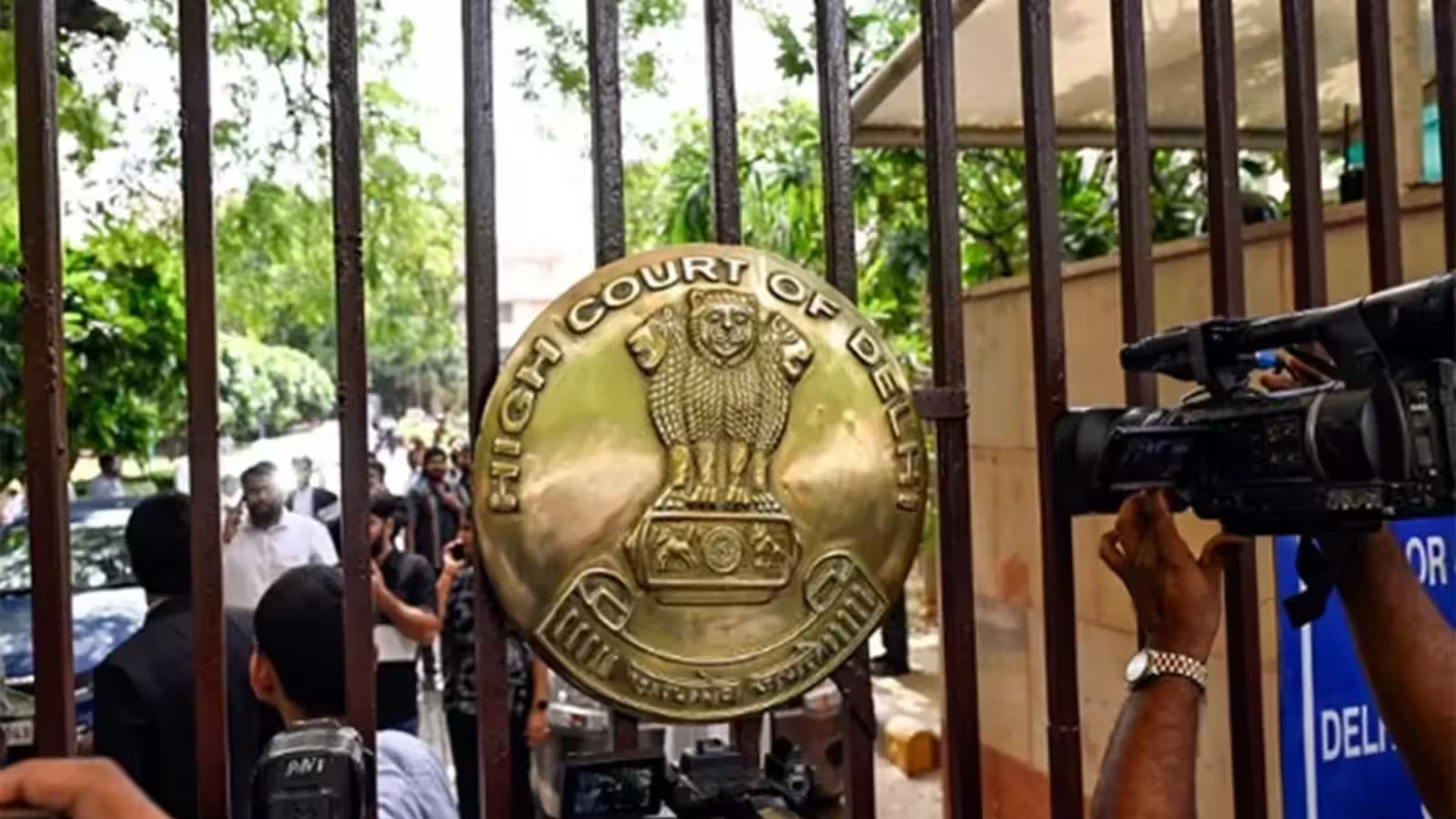
Latest on Jantar Mantar Protests: A new supreme court petition has challenged the recent administrative push to relocate public demonstrations away from the historic site of Jantar Mantar. This legal action addresses the ongoing debate surrounding jantar mantar protests and their role in maintaining democratic expression. The filing seeks to overturn directives that limit the ability of citizens to gather in central locations.
The core of the protest restriction challenge lies in the accessibility of these spaces for effective public advocacy. Authorities have sought to move demonstrators to peripheral zones, arguing that such shifts are necessary for traffic management. However, petitioners contend that these moves undermine the visibility and impact of peaceful assembly.
Evaluating the Jantar Mantar Protests
The legal filing emphasizes that the judiciary has previously affirmed the legitimacy of jantar mantar protests as a central venue. By pushing activists toward distant areas, the current policy complicates the logistical success of public campaigns. Critics argue that moving these events ignores the historical significance of the chosen site.
Designated alternative locations now include the following venues
- Ramlila Ground
- Burari Ground
These sites are often cited by officials as safer alternatives for managing crowds. Yet, participants in jantar mantar protests argue that these locations lack the central importance required for political engagement.
Analysis of Delhi Police Protest Rules
New delhi police protest rules mandate that groups must use specific sites outside the heart of the city. This policy shift is intended to balance public order with the constitutional right to assemble. Nevertheless, the petition highlights how these regulations may unintentionally suppress the reach of meaningful advocacy.
Implementing ramlila ground protests as a default measure remains a point of contention for many organizations. The distance from administrative hubs makes communication with government officials difficult for demonstrators. Legal experts are now examining whether these rules infringe upon fundamental civil liberties.
Concerns Regarding Alternative Sites
The suitability of the burari ground protest site is a central theme within the ongoing litigation. Petitioners assert that this location is too remote to sustain the momentum of public movements. While the state maintains that relocation protects urban infrastructure, activists view it as a tactic to dilute dissent.
The supreme court petition argues that the state must provide accessible venues to ensure the efficacy of jantar mantar protests. It notes that the original site is uniquely positioned to facilitate direct engagement with policy makers. Without access to such hubs, the impact of jantar mantar protests is significantly diminished.
The debate over the burari ground protest site underscores the tension between public order and democratic participation. As the court considers the protest restriction challenge, the visibility of jantar mantar protests remains a critical concern for civil society. Whether the delhi police protest rules will be upheld or modified rests on the judicial interpretation of assembly rights.
Ultimately, this legal proceeding will define the future of public demonstrations in the city. The court must decide if the convenience of authorities outweighs the necessity of visible, central protest spaces. A final ruling will likely set a lasting precedent for how citizens exercise their voice in public squares.
More updates
Follow the latest Law & Gov news and related coverage.
What's Your Reaction?
 Like
0
Like
0
 Dislike
0
Dislike
0
 Love
0
Love
0
 Funny
0
Funny
0
 Wow
0
Wow
0
 Sad
0
Sad
0
 Angry
0
Angry
0

Isha Agarwal writes about personal finance, taxes, savings and smart investing. She believes everyone should feel confident managing money, and her guides are simple and actionable. Her articles help readers plan better for the future.



Comments (0)