
Moderna Cancer Vaccine Success Could Open New Era in Cancer Treatment
Moderna and Merck's personalized cancer vaccine cut melanoma recurrence and spread in a large trial, opening the door to treating other tumor types.
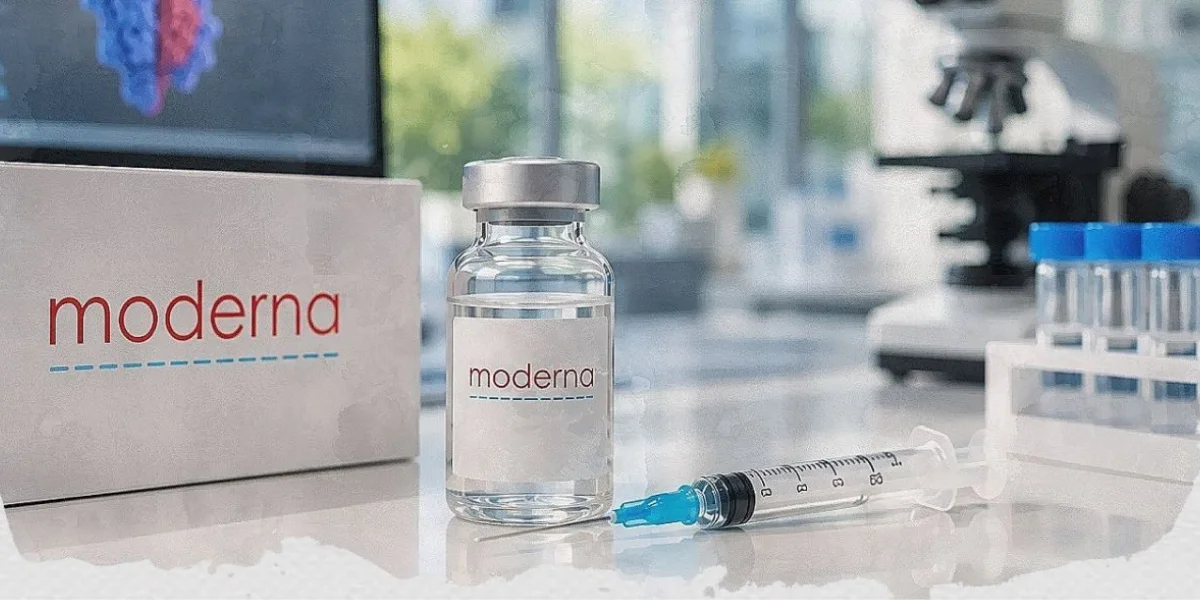
Merck and Moderna's success with a personalized Moderna cancer vaccine designed to keep melanoma at bay has opened a new avenue of treatment that doctors hope could work against many types of tumors, according to CNN. Unlike chemotherapy, which kills both healthy and cancerous cells, or immunotherapy, which revs up the immune system broadly, personalized cancer vaccines train the immune system to specifically target mutations found only on a person's tumor.
Merck and Moderna said on Wednesday that their personalized cancer vaccine helped reduce the risk of melanoma returning and spreading in a large trial involving more than 1,000 patients whose localized tumors had been surgically removed but carried a high risk of recurrence. Moderna expects thousands of melanoma patients could benefit within the first few years of approval, the report said.
"It is a big deal for the field in general," said Dr. Ryan Sullivan, director of the Center for Melanoma at Mass General Brigham Cancer Institute. Dr. Julie Gralow, chief medical officer of the American Society of Clinical Oncology, called the trial result "a monumental leap forward" that validates mRNA cancer vaccine technology.
Beyond melanoma, personalized cancer vaccine approaches are in late-stage development for other tumor types, with large trials under way in surgically removed non-small cell lung cancers, and mid-stage and early-stage trials in bladder, kidney, pancreatic and stomach cancers, Moderna President Stephen Hoge told Reuters.
The treatment, known as intismeran autogene, combines up to nine doses of Merck's Keytruda with up to nine doses of a customized mRNA vaccine that instructs the immune system to attack the patient's specific cancer cells. The companies said they observed no new side effects with the addition of the vaccine compared with Keytruda alone. The companies have not yet released the full trial results and will continue following participants to assess overall survival.
Five-year Moderna cancer vaccine data from a previous mid-stage trial, presented in June, showed the vaccine cut the risk of cancer recurrence by half and reduced the risk of spread to new locations by 59% compared with Keytruda alone, with no new increase in serious side effects.
Dr. Elizabeth Buchbinder, a melanoma specialist at Mass General Brigham Cancer Institute, said the added benefit of the vaccine "may change the math" doctors use when weighing Keytruda's benefits against side effects for lower-risk patients. She said melanoma was selected for testing partly because it produces many mutations, making it easier for the immune system to identify, and that many other cancer types share this trait.
What's Your Reaction?
 Like
1
Like
1
 Dislike
0
Dislike
0
 Love
0
Love
0
 Funny
0
Funny
0
 Wow
0
Wow
0
 Sad
0
Sad
0
 Angry
0
Angry
0

News Editor & SEO Content Writer with 6+ years of experience in breaking news, SEO writing, keyword research, WordPress publishing, and content optimization. Focused on creating high-quality, search-friendly content that drives organic traffic.











Comments (0)