
Sebi AIF Regulation: Essential New Rules for Greater Accountability
Sebi WTM Sandip Pradhan stresses that flexibility in sebi aif regulation demands greater accountability, not relaxation. Learn why risk-based growth.
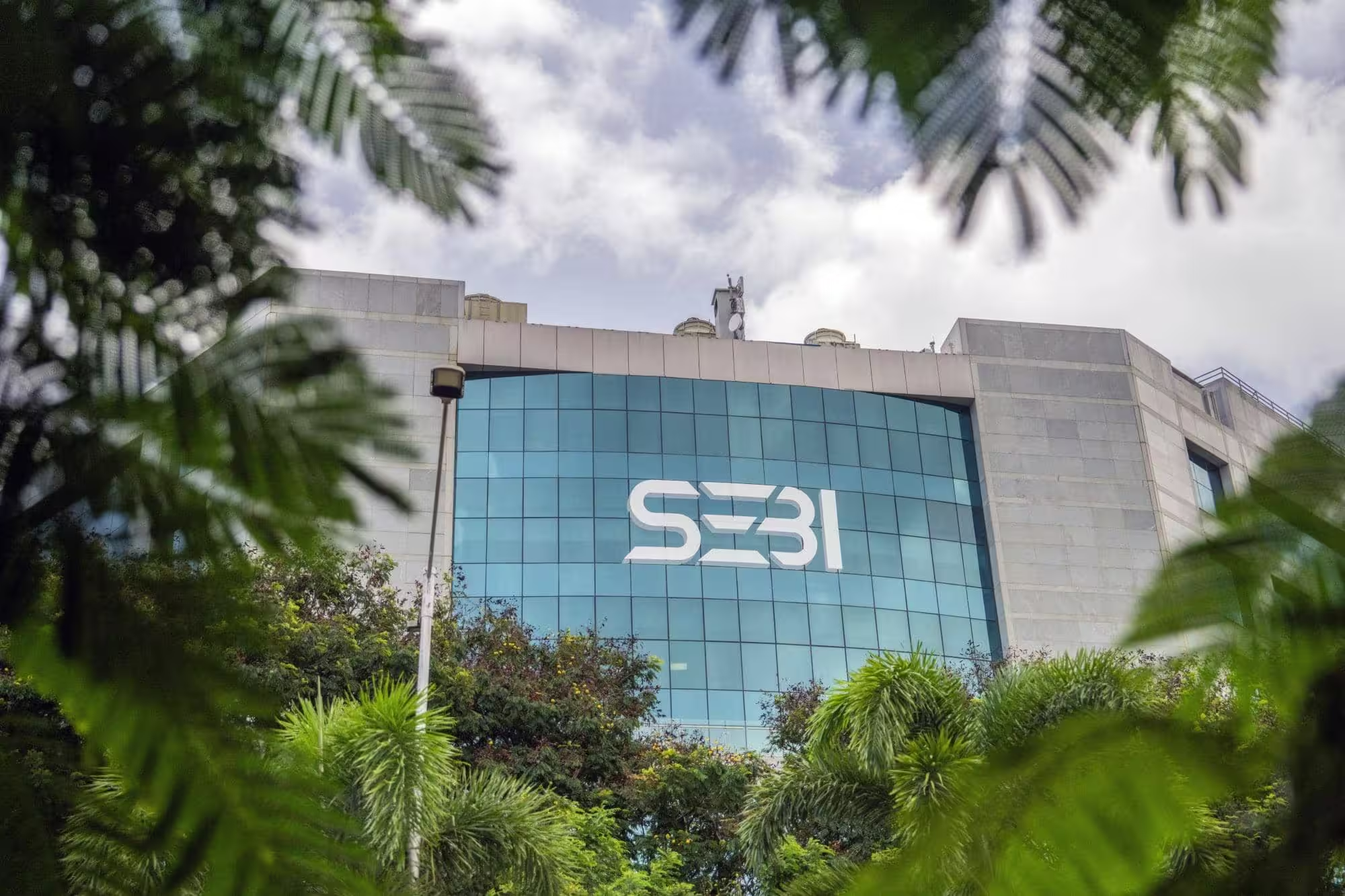
Latest on Sebi Aif Regulation: The progression of private market governance reflects a transition toward more advanced oversight. Sandip Pradhan, a Whole Time Member at SEBI, recently clarified that granting funds greater operational autonomy does not equate to a retreat from oversight. This perspective underscores that increased latitude for fund managers is paired with a heightened demand for professional stewardship.
Evolving Strategies for Sebi AIF Regulation
Authorities now categorize the growth of private investment vehicles as a focal point for institutional monitoring. According to Sandip Pradhan, the strategy for governing private markets must adapt to remain pertinent and effective. The current framework aims to harmonize the promotion of financial innovation with the maintenance of systemic equilibrium. Investment professionals should note that the regulator is transitioning toward a model of risk-centric supervision.
This methodology ensures that administrative scrutiny aligns with the specific risk profiles of various market participants. Consistent alignment with established standards is now a fundamental requirement for competent fund operations.
The Shift Toward Data-Driven Supervision
Contemporary oversight demands elevated levels of transparency from all entities within the space. Regulatory focus is shifting toward the precision and regularity of information submission. By utilizing analytical insights, oversight bodies can detect vulnerabilities before they transform into broader market hazards.
- Upgraded standards for reporting information by all managers.
- Ongoing scrutiny of valuation methodologies and liquidity levels.
- Engagement with participants regarding intricate investment vehicles.
This emphasis ensures the longevity of the financial ecosystem. Analytical capabilities enable a form of oversight that is both balanced and precise. Compliance is no longer viewed as a stagnant task but as an evolving necessity of current market mandates.
Balancing Flexibility with Enhanced Accountability
Providing funds with more structural freedom necessitates a simultaneous boost in internal governance. The regulatory framework recognizes that excessive rigidity can hinder expansion. However, managers are expected to view this liberty as a requirement for rigorous self-policing. Official guidance consistently reinforces the importance of ethical conduct.
Should managers misuse their operational freedom, the oversight environment will inherently become more restrictive. Consequently, the regulatory structure acts as a protective boundary rather than a hindrance to progress. The objective is to nurture a sophisticated investment climate. By accepting these obligations, managers play a role in sustaining the health of the broader market.
Maintaining high standards of professionalism remains the primary method for ensuring stability. Ultimately, the oversight environment is moving toward a more sophisticated, risk-sensitive approach. Sandip Pradhan’s observations confirm that flexibility is a conditional benefit linked to strict accountability. As the industry advances, ongoing compliance with these expectations will be vital for all participants.
Key points: Sebi Aif Regulation
- Sandip Pradhan Sebi: latest updates on sebi aif regulation.
- Private Market Oversight: latest updates on sebi aif regulation.
- Sebi Wtm Update: latest updates on sebi aif regulation.
More updates
Follow the latest Market news and related coverage.
What's Your Reaction?
 Like
0
Like
0
 Dislike
0
Dislike
0
 Love
0
Love
0
 Funny
0
Funny
0
 Wow
0
Wow
0
 Sad
0
Sad
0
 Angry
0
Angry
0

Karan Bhatia is a business reporter who focuses on banking, real estate and the stock market. He explains how policy changes and market movements affect investors and families. His reports are well researched and easy to follow.









Comments (0)