
Tata, Homi Bhabha and Vikram Sarabhai: The Connections, Salaries and Untold History Behind India’s Scientific and Industrial Legacy
From N Chandrasekaran and Ratan Tata to Homi Bhabha, JRD Tata and Vikram Sarabhai, here is the history, family connection, salary and leadership story behind India’s Tata and scientific legacy
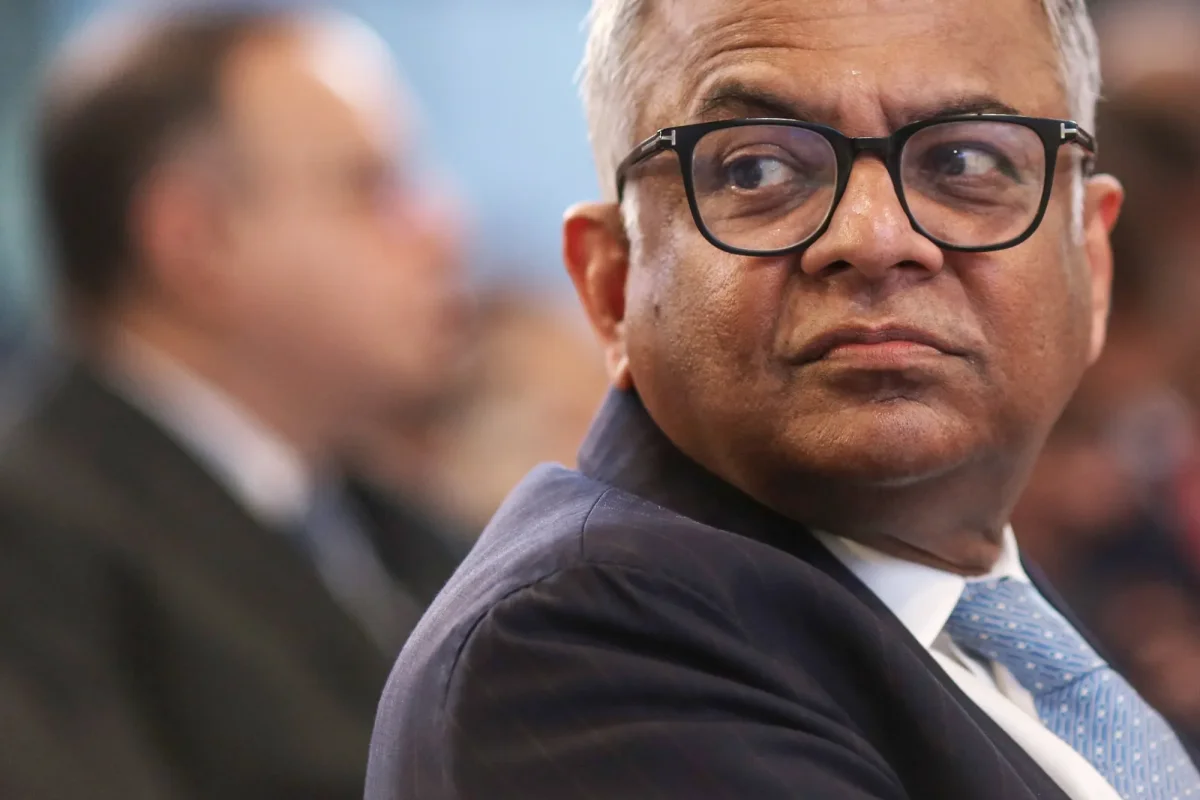
MUMBAI, August 12: The Tata Group's leadership and ownership structure has come into renewed focus after Tata Sons Chairman N. Chandrasekaran announced that he will step down when his current term ends in February 2027, amid tensions with Tata Trusts, which controls about 66% of Tata Sons.
The development has also revived interest in the relationship between Chandrasekaran and the late Ratan Tata, the role of J.R.D. Tata in the group's history, and the remarkable connection between the Tata industrial family and scientists such as Homi Jehangir Bhabha.
Here are answers to the key questions surrounding the Tata legacy and two of India's most influential scientists.
How is N. Chandrasekaran related to Ratan Tata?
N. Chandrasekaran was not related to Ratan Tata by blood or marriage.
His connection was professional. Chandrasekaran joined the Tata Group in 1987, rose through Tata Consultancy Services and eventually became TCS CEO. In 2017, he was appointed Executive Chairman of Tata Sons, succeeding Cyrus Mistry.
Ratan Tata played an important role in recommending Chandrasekaran's continuation as chairman. When Tata Sons renewed Chandrasekaran's term in 2022, Tata's official statement said Ratan Tata, then a special invitee to the board meeting, expressed satisfaction with Chandrasekaran's performance and recommended another five-year term.
The relationship was therefore one of chairman and successor, rather than a family relationship.
What is the salary of the CEO of Tata?
There is technically no single "CEO of Tata Group."
Tata Sons is the principal investment holding company and promoter of Tata companies, while individual Tata companies have their own boards and CEOs.
For example, Tata Consultancy Services, Tata Motors, Tata Steel, Titan, Tata Power and Indian Hotels have separate management structures.
The top group-level executive position at Tata Sons is the Executive Chairman.
What is the salary of N. Chandrasekaran?
Tata Sons' FY2024-25 annual report provides the clearest official figure.
For FY25, N. Chandrasekaran received:
- Gross salary: ₹14.52 crore
- Commission: ₹140.69 crore
- Other remuneration: about ₹0.60 crore
- Total remuneration: ₹155.81 crore
The figures are disclosed in Tata Sons' official annual return and annual report.
That makes the ₹155.81-crore figure much more useful than describing his entire package simply as "salary", because the majority of the amount came through commission.
Who controls 66% of Tata Sons?
The answer is philanthropic Tata trusts.
Tata Group says 66% of Tata Sons' equity share capital is held by philanthropic trusts supporting education, healthcare, livelihoods, arts and culture.
The largest trusts historically include the Sir Dorabji Tata Trust and Sir Ratan Tata Trust.
This structure is unusual because the Tata Group is not controlled like a conventional promoter-owned family conglomerate. A large portion of the holding company's ownership is held through philanthropic institutions.
Who owns Tata Sons now?
Tata Sons remains a privately held company whose largest shareholder group is the philanthropic Tata trusts.
The current structure is particularly important because the trusts' 66% stake gives them enormous influence over Tata Sons' governance. Reuters reported on August 12, 2026, that the current leadership dispute involving Chandrasekaran is closely connected to tensions with Tata Trusts.
Tata Sons itself is the holding company that owns significant stakes in many major Tata businesses.
Is Ratan Tata related to J.R.D. Tata?
Yes, there was a family connection within the extended Tata family, although the exact relationship is often simplified incorrectly.
J.R.D. Tata was the son of Ratanji Dadabhoy Tata, who was a first cousin of Tata Group founder Jamsetji Tata.
Ratan Tata was born to Naval Tata and Soonoo Tata and was raised by his grandmother Navajbai Tata. J.R.D. Tata later appointed Ratan Tata as his successor.
So their relationship was both family-linked and deeply professional. J.R.D. was also the person who ultimately selected Ratan Tata to succeed him as chairman of the Tata Group.
Was Homi Bhabha related to the Tata family?
Yes.
This is one of the fascinating links between India's scientific and industrial history.
Homi Jehangir Bhabha came from a prominent Parsi family. His family had connections with the Tata community, and Bhabha's family was connected by marriage to the Tata family.
A particularly important connection was Meherbai Bhabha, daughter of Homi Bhabha's family, who married Sir Dorabji Tata. Tata's official history records that Sir Dorabji Tata married Meherbai Bhabha, daughter of H.J. Bhabha.
Bhabha also worked closely with the Tata philanthropic and institutional ecosystem, most famously through the creation of the Tata Institute of Fundamental Research (TIFR).
Did Homi Bhabha meet Oppenheimer?
Homi Bhabha and J. Robert Oppenheimer belonged to the same international scientific generation and moved within overlapping global physics circles.
However, claims that they were close personal friends or that a specific famous meeting occurred should be treated carefully unless supported by documentary evidence.
Bhabha spent important years at Cambridge and became internationally recognised for his work in particle physics and cosmic rays before returning to India. His later career included establishing TIFR and helping build India's nuclear programme.
There is not enough reliable evidence to present a dramatic personal relationship between Bhabha and Oppenheimer as established fact.
Why did Homi Bhabha never marry?
Homi Bhabha never married, but there is no universally accepted documented explanation that he deliberately rejected marriage for one specific reason.
He devoted enormous energy to physics, institution building, art and India's scientific programme. He was known for interests extending beyond physics, including painting, music and the arts.
Some biographies and popular accounts speculate about his personal relationships and lifestyle, but speculation should not be presented as an established reason for his remaining unmarried.
Was Dr Homi Bhabha a Hindu?
No. Homi Jehangir Bhabha was from the Parsi Zoroastrian community.
The term "Parsi" refers to the Zoroastrian community in India, whose religious tradition traces back to Zoroastrianism. Therefore, describing Bhabha simply as a Hindu would be historically incorrect.
His Parsi background was part of the same wider community from which several prominent Tata figures emerged.
Is Homi Jehangir Bhabha a Parsi?
Yes.
Homi Jehangir Bhabha was a Parsi Zoroastrian and came from an influential Parsi family in Bombay.
His contribution to India went far beyond theoretical physics. He founded TIFR in 1945 and played a central role in establishing India's nuclear-energy programme.
His work eventually led to institutions that became foundational to India's scientific and nuclear infrastructure.
Who was the Prime Minister when Homi Bhabha died?
This answer has an interesting timing detail.
Homi Bhabha died on January 24, 1966, when Air India Flight 101 crashed near Mont Blanc.
On that exact date, Gulzarilal Nanda was serving as acting Prime Minister, having taken office on January 11 following the death of Prime Minister Lal Bahadur Shastri.
Indira Gandhi became Prime Minister on January 24, 1966, according to the Prime Minister of India's official records.
So, if the question is specifically asking who was Prime Minister at the time of Bhabha's death, the most precise answer is Gulzarilal Nanda.
Were Homi Bhabha and Vikram Sarabhai friends?
Yes, Bhabha and Vikram Sarabhai had a close professional and personal association and were two of the most important figures in India's post-independence scientific development.
Their relationship was especially significant because both believed that India needed strong scientific institutions rather than simply importing technology.
Sarabhai became a central figure in India's space programme, while Bhabha led the development of the country's nuclear and fundamental research institutions.
Their scientific partnership became part of the foundation for India's later space and nuclear programmes. Sarabhai's daughter Mallika Sarabhai has also spoken publicly about Bhabha's relationship with her family.
Where was Vikram Sarabhai found dead?
Vikram Sarabhai died on December 30, 1971, at Kovalam in Thiruvananthapuram, Kerala.
The Indian Space Research Organisation's official biography records Kovalam as the place of his death.
Sarabhai had been one of the principal architects of India's space programme and served as chairman of the Atomic Energy Commission.
What was Mrinalini Sarabhai's religion?
Mrinalini Sarabhai was born into a family with a Tamil Brahmin father and Malayali Nair mother.
Her father, S. Swaminathan, was a prominent lawyer, while her mother, Ammu Swaminathan, was a social worker, independence activist and later parliamentarian.
It is therefore more accurate to describe her family background than to assign a simplistic religious label without qualification.
The larger connection: Tata, Bhabha and Sarabhai
The histories of the Tata Group, Homi Bhabha and Vikram Sarabhai are intertwined with the creation of modern India's institutions.
The Tata philanthropic trusts helped establish and support institutions dedicated to science, education and research. Bhabha used that support to build TIFR and later India's nuclear research infrastructure. Sarabhai built institutions that became central to India's space programme.
Meanwhile, J.R.D. Tata transformed the Tata Group for much of the 20th century before choosing Ratan Tata as his successor. Decades later, Ratan Tata backed N. Chandrasekaran to lead Tata Sons.
The result is a remarkable chain of leadership:
Jamsetji Tata → J.R.D. Tata → Ratan Tata → N. Chandrasekaran
And alongside that industrial story runs another:
Homi Bhabha → India's nuclear research institutions
Vikram Sarabhai → India's space programme
Together, these figures helped shape not only one business group but major parts of India's industrial, scientific and institutional history.
What is changing now?
The latest development is that Chandrasekaran has announced his decision to leave the Tata Sons chair when his current term ends in February 2027. The announcement comes amid tensions between Tata Sons' leadership and Tata Trusts, whose 66% ownership gives the philanthropic arm a central role in the group's future governance.
The next Tata Sons chairman will therefore inherit not just a global conglomerate, but a governance structure built over generations around the unusual principle of combining business ownership with large-scale philanthropy.
What's Your Reaction?
 Like
0
Like
0
 Dislike
0
Dislike
0
 Love
0
Love
0
 Funny
0
Funny
0
 Wow
0
Wow
0
 Sad
0
Sad
0
 Angry
0
Angry
0



Comments (0)