
Ancient Rajasthan Temple Defies Hindu Custom by Remaining Open During Eclipses
Discover why the 2,000-year-old Maa Mata Kali Akhara in Deedwana, Rajasthan, stays open during solar and lunar eclipses for Tantra sadhana and mantra siddhi.

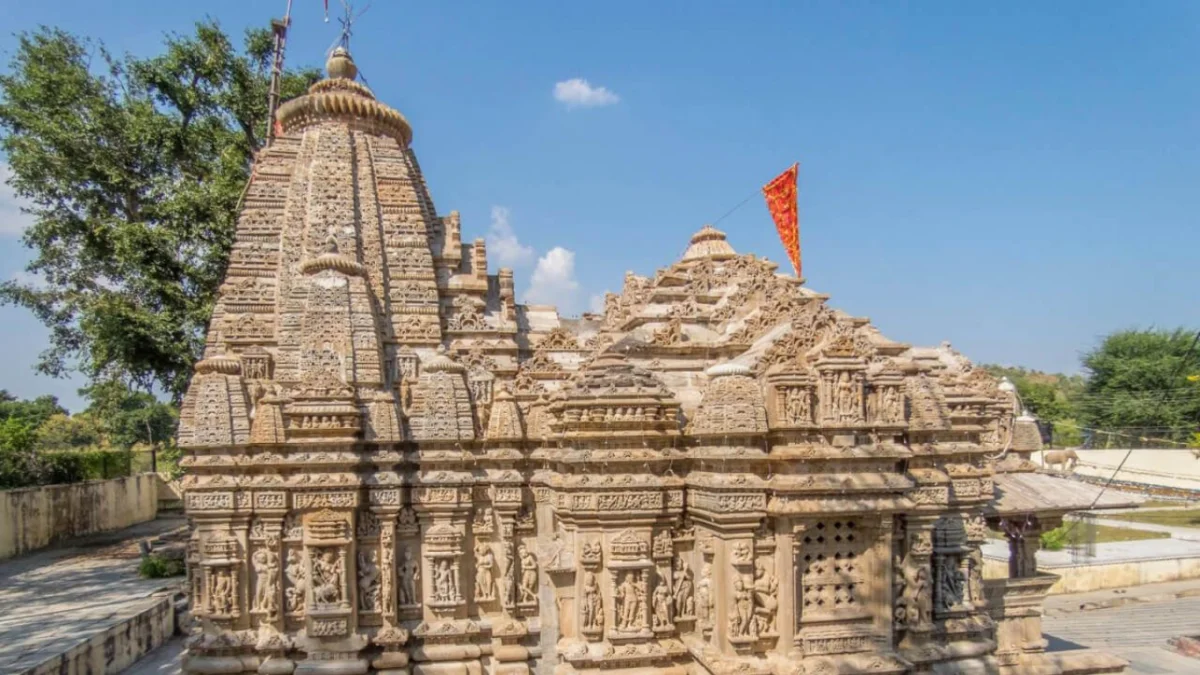
DEEDWANA, India — A historic 2,000-year-old shrine in Rajasthan's Deedwana district is drawing widespread attention for a rare spiritual custom that stands in direct opposition to standard Hindu temple practices across India. While the vast majority of temples strictly shutter their doors during solar and lunar eclipses due to traditional Sutak rules—periods deemed spiritually inauspicious—the Maa Mata Kali Akhara remains fully operational, serving as a rare epicenter for specialized esoteric rituals during these celestial events.
According to a report by Network18 journalist Jagriti Dubey, the temple management and local devotees maintain that these exact cosmic alignments provide an unparalleled window for spiritual advancement. Rather than avoiding the eclipse, practitioners utilize the hours of darkness as the most potent time for executing Tantra sadhana (esoteric spiritual practices) and achieving mantra siddhi (the perfection of sacred chants).
This unusual operational policy highlights the temple's deeply entrenched roots in Shaktism and the Nath monastic order, distinguishing it as a significant living laboratory for centuries-old Tantric traditions in northern India.
A Two-Millennium Legacy Linked to Guru Gorakhnath
Originally established near the Singhi Bas area, the Maa Mata Kali Akhara boasts an ancient history spanning roughly two millennia. The sacred complex, dedicated to the deity Mahakali, is deeply intertwined with the teachings of Guru Gorakhnath, the influential founder of the Nath Hindu monastic movement. Over the centuries, the site has evolved from a secluded ascetic camp into a major destination for religious tourism in the region.
The physical layout of the temple complex reflects its long-standing ascetic history. A prominent feature within the courtyard is an ancient Peepal tree, which local religious scholars and administrators view as a living monument to the intense penances executed by generational saints.
The site underwent a major historical transition in Vikram Samvat 1826, when a prominent historic saint, Yogi Manoharnath, formally established a Gurudwara at the location, anchoring the monastic community's presence in Deedwana.
Supernatural Claims and Historic Penances
The temple's reputation as a hub for miraculous occurrences has been reinforced by several documented claims from temple associates over the last few decades. Local records indicate that during a comprehensive renovation of the temple's marble courtyard in 1992, an unidentifiable, viscous substance resembling a mixture of sacred ash and holy ghee reportedly began to seep continuously from beneath the flooring.
Furthermore, temple folklore was deeply impacted by an event in 2001. Associates of the shrine claimed to have witnessed the figures of legendary ancient Siddha yogis, Yogi King Bhartrihari and Yogi Gopichand, visibly traversing the temple grounds alongside a lion before abruptly vanishing. According to local belief systems, these long-deceased yogis originally performed highly secretive sabar mantra rituals at the site and vowed to return invisibly to inspect the temple grounds once every twelve years.
Beyond these legends, the temple holds the physical legacy of extreme asceticism. The complex houses the memory of Oghad Sant Banjiram, a revered historical ascetic who gained prominence for executing a flawless six-month fast entirely devoid of both food and water. Following this extreme period of deprivation, the saint underwent living samadhi—a voluntary, ritualistic transition into a permanent meditative state of death within the temple precincts.
Modern Impact on Religious Tourism
Today, the Maa Mata Kali Akhara serves a dual purpose as both a highly active monastic center and a major driver of regional religious tourism. Its steadfast refusal to adhere to standard eclipse closures continues to puzzle casual visitors while magnetizing serious spiritual practitioners from across the country.
As local authorities continue to develop infrastructure to support the influx of cultural tourists to the Nagaur and Deedwana regions, the temple stands as a stark reminder of the diverse, localized variations that exist within broader Indian spiritual practices. For scholars of religion and travelers alike, the shrine provides an uninterrupted link to the ancient, secretive worlds of early Shaktism and Nath monastic discipline.
What's Your Reaction?
 Like
1
Like
1
 Dislike
0
Dislike
0
 Love
0
Love
0
 Funny
0
Funny
0
 Wow
0
Wow
0
 Sad
0
Sad
0
 Angry
0
Angry
0










Comments (0)