
Delhi HC Aadhaar: Breaking Stay on Prosecutor Attendance Mandate
Delhi HC stays the order requiring biometrics for prosecutors. Justice Amit Mahajan halts the delhi hc aadhaar mandate after a welfare group plea.
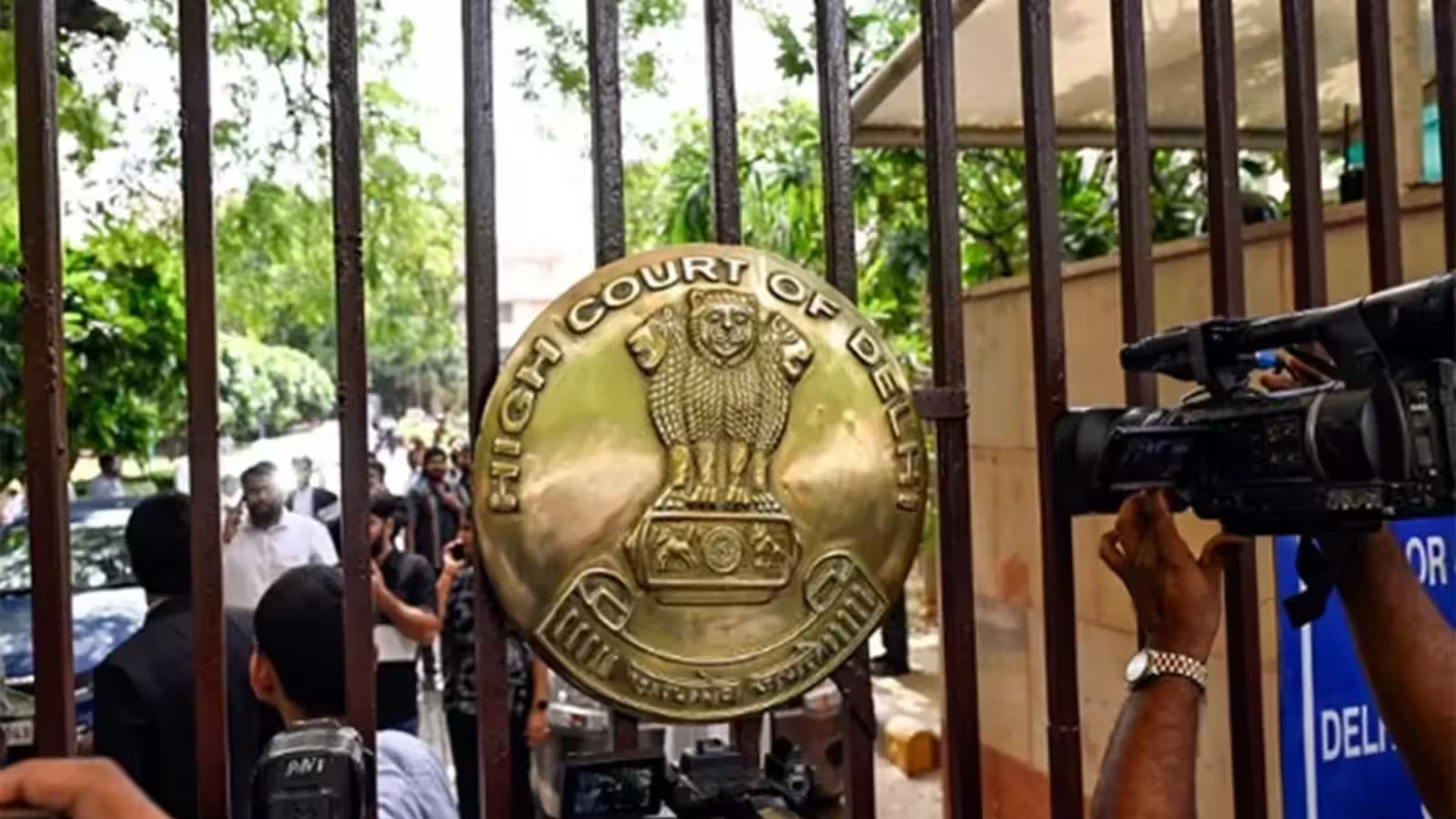
The legal landscape recently shifted regarding administrative oversight for legal professionals. The delhi hc aadhaar ruling highlights ongoing tensions between government mandates and employee privacy. This development reflects a significant judicial intervention in administrative procedures.
Legal experts are monitoring how the delhi hc aadhaar proceedings unfold. The court recently intervened in a dispute involving mandatory technology integration. This situation underscores the balance between workplace efficiency and individual rights.
Judicial Intervention and the Delhi HC Aadhaar Ruling
The delhi high court stay provides immediate relief to those affected by the recent directive. Justice Amit Mahajan presided over the session to address the legal challenge. His order temporarily halts the enforcement of the controversial attendance policy.
The court issued a formal notice to the relevant authorities regarding this grievance. This move ensures that the current system remains in place during litigation. All parties now await further instructions from the bench.
Challenges from the Delhi Prosecutors Welfare Association
The delhi prosecutors welfare association initiated this challenge to protect the interests of its members. They formally contested an order issued by the delhi government prosecution department. The petition focuses on the legality of the aadhaar biometrics mandate for legal staff.
Several core objections were raised during the initial filing
- The imposition of digital surveillance on legal professionals.
- Potential privacy vulnerabilities linked to the biometric requirement.
- Disruption to the court attendance procedures currently in place.
The legal team argues that the delhi hc aadhaar policy lacks a proper statutory foundation. They maintain that prosecutors require a different approach to timekeeping than general staff. This argument remains central to their ongoing case.
Implications of the Aadhaar Biometrics Mandate
The delhi hc aadhaar order highlights broader concerns regarding digital governance. Many professionals worry about the centralization of sensitive biometric data. Such mandates often trigger complex debates about data security and workplace autonomy.
The government maintains that the aadhaar biometrics mandate promotes administrative accountability. Officials argue that modern tools are necessary for efficient record-keeping across departments. However, the court must now weigh these claims against individual liberty.
The delhi hc aadhaar case serves as a critical test for administrative policy. Future rulings could influence how other government sectors utilize similar tracking technologies. Observers expect the next session to clarify the scope of the delhi hc aadhaar restrictions.
The legal community continues to scrutinize the necessity of these digital requirements. Balancing institutional needs with personal privacy remains a delicate task for the judiciary. This case will likely set a significant precedent for administrative oversight.
In conclusion, the court’s decision to pause the implementation provides necessary breathing room for all stakeholders. The delhi hc aadhaar matter demonstrates the importance of legal review in administrative rule-making. We anticipate further developments as the case proceeds through the judicial system.
More updates
Follow the latest Law & Gov news and related coverage.
What's Your Reaction?
 Like
0
Like
0
 Dislike
0
Dislike
0
 Love
0
Love
0
 Funny
0
Funny
0
 Wow
0
Wow
0
 Sad
0
Sad
0
 Angry
0
Angry
0

Isha Agarwal writes about personal finance, taxes, savings and smart investing. She believes everyone should feel confident managing money, and her guides are simple and actionable. Her articles help readers plan better for the future.










Comments (0)