
Yes Bank AT1 Bonds: Breaking Ruling Reverses 8,415 Crore Write-off
The Supreme Court upholds the Bombay HC ruling, invalidating the Rs 8,415 crore write-off of YES Bank AT1 bonds. A major victory for bondholders.
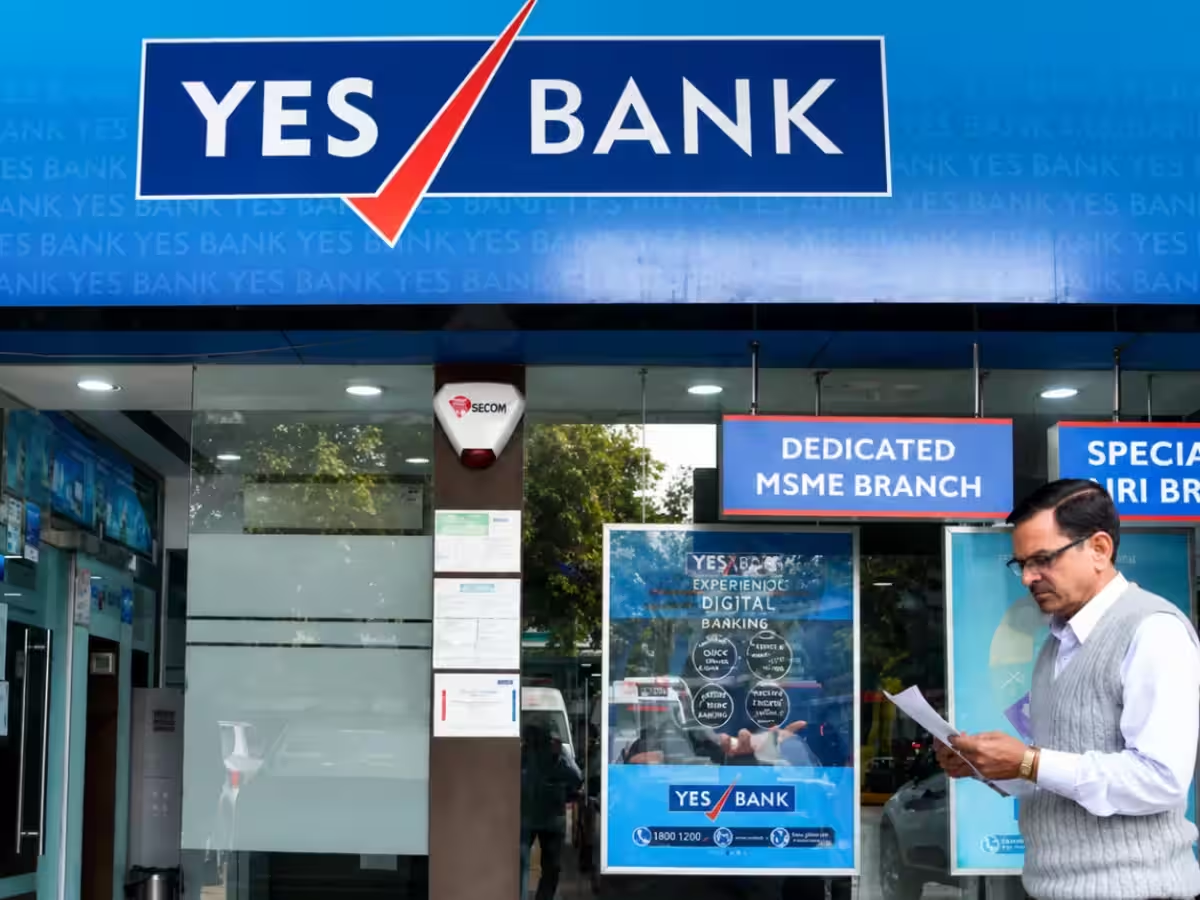
Supreme Court Finalizes Decision on YES Bank AT1 Bonds Dispute
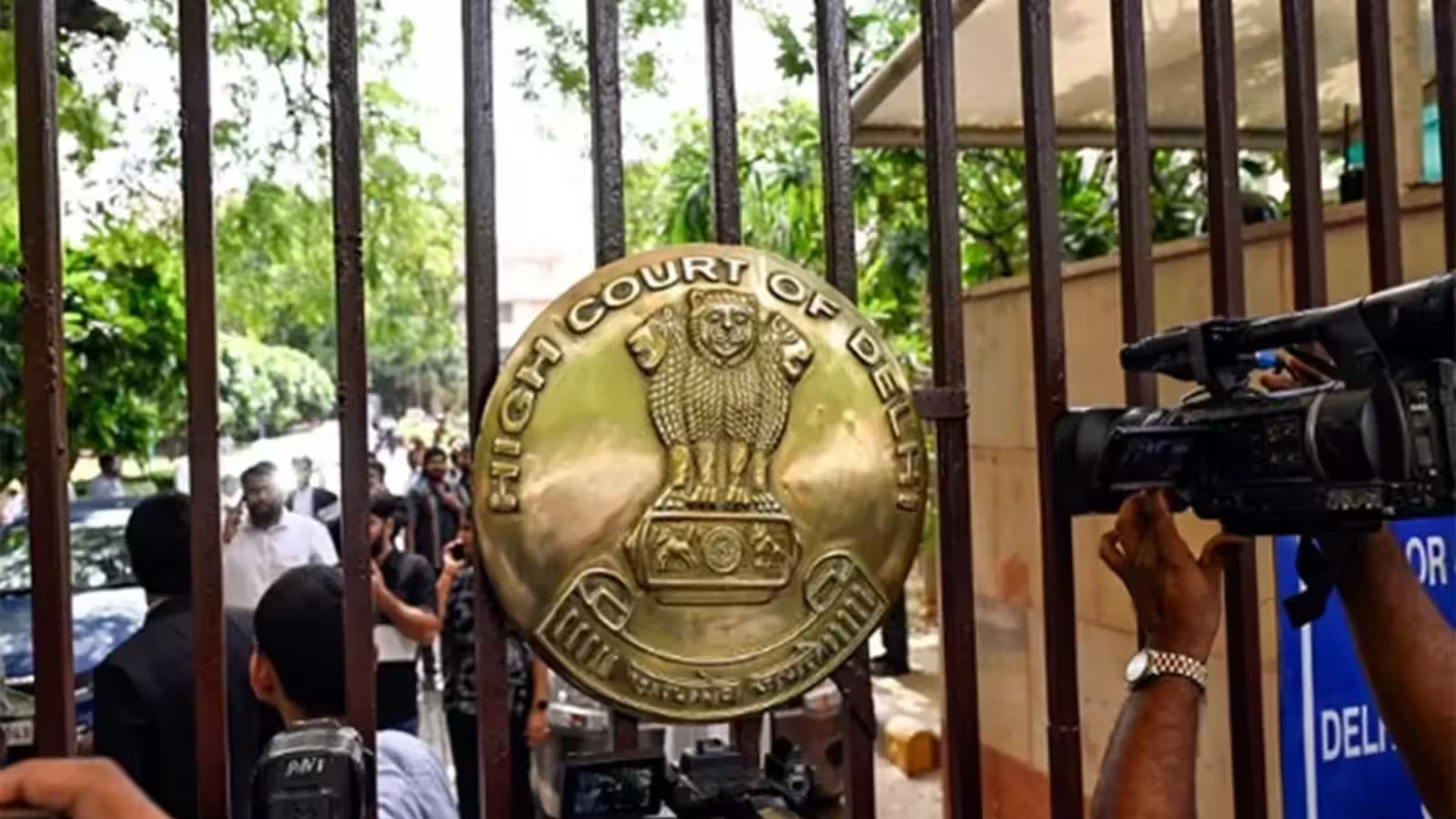
The Supreme Court has officially upheld the Bombay High Court ruling that quashed the controversial write-off of yes bank at1 bonds worth Rs 8,415 crore. This landmark decision marks a significant legal victory for investors who challenged the bank's previous actions during its financial crisis. The judicial outcome provides much-needed clarity on the status of these yes bank at1 bonds.
This legal battle originated from the yes bank restructuring plan implemented in March 2020. During that period, authorities determined that these specific debt instruments should be written down completely. By affirming the lower court's stance, the Supreme Court has effectively invalidated that original at1 bond write-off.
Legal Implications for Yes Bank AT1 Bonds
The supreme court judgment confirms that the initial cancellation of the debt was legally flawed. The bombay high court ruling had previously argued that the process followed by the administrator lacked proper justification. Now, the apex court has cemented this position, impacting the overall yes bank restructuring framework.
This decision serves as a major turning point for those holding yes bank at1 bonds. The legal certainty provided here creates a clear pathway for investor recovery regarding these assets. Stakeholders who felt disenfranchised by the original at1 bond write-off can now pursue their claims with renewed confidence.
Impact on Stakeholders and Market Dynamics
The litigation involved various parties, including the Reserve Bank of India, the Centre, and the bank itself, all of whom challenged the initial High Court verdict. The Supreme Court rejected these appeals, favoring the rights of the investors. Consequently, the market must now adjust to the implications of restoring these yes bank at1 bonds to the balance sheet.
Multiple groups were affected by the court's final order
- Institutional investors holding significant tranches of the debt.
- Individual retail investors who faced substantial financial losses.
- Regulatory bodies tasked with overseeing the banking sector's stability.
Moving Toward Investor Recovery
The restoration of these assets is a complex process. The court's decision facilitates investor recovery by removing the obstacle created by the 2020 write-down. However, the practical execution of this ruling will require careful coordination between the bank and the relevant authorities.
The finality of this supreme court judgment ensures that the rights of bondholders are protected under the law. It underscores the importance of procedural fairness during any large-scale yes bank restructuring initiative. As the dust settles, the focus shifts to how the bank will address the reinstatement of these yes bank at1 bonds.
In summary, the Supreme Court has decisively closed this chapter of financial litigation. By upholding the earlier decision, the court has safeguarded the interests of those impacted by the at1 bond write-off. This outcome stands as a testament to the role of the judiciary in protecting investor rights within the banking sector.
More updates
Follow the latest Law & Gov news and related coverage.
What's Your Reaction?
 Like
0
Like
0
 Dislike
0
Dislike
0
 Love
0
Love
0
 Funny
0
Funny
0
 Wow
0
Wow
0
 Sad
0
Sad
0
 Angry
0
Angry
0

Isha Agarwal writes about personal finance, taxes, savings and smart investing. She believes everyone should feel confident managing money, and her guides are simple and actionable. Her articles help readers plan better for the future.







Comments (0)