
How Rohit Sharma Changed India's White-Ball Cricket as Captain
Rohit Sharma's captaincy reshaped India's white-ball cricket with fearless powerplay batting, ended an 11-year ICC trophy drought, and left a lasting team culture.
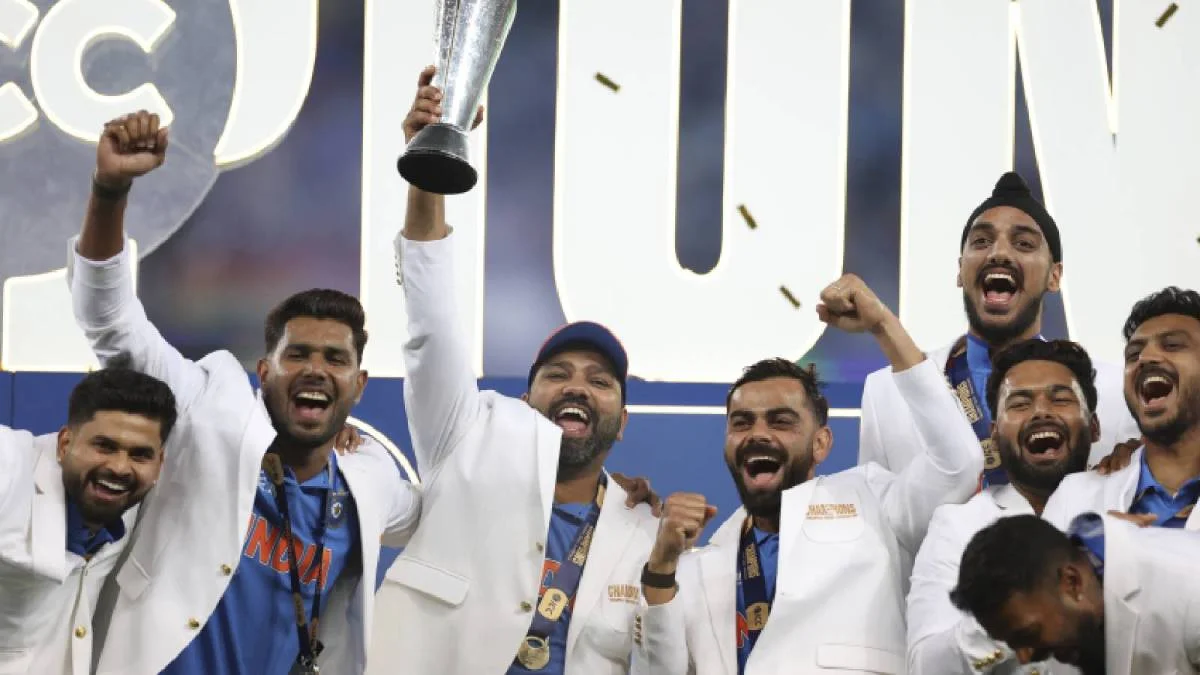
MUMBAI — When Rohit Sharma took over India's white-ball captaincy in late 2021, he inherited a talented side still searching for its identity in the format. By the time he handed over the ODI reins to Shubman Gill in 2025, he had reshaped how India bats, thinks and wins in limited-overs cricket — leaving behind two ICC titles and a template the next generation is still building on.
A Painful Starting Point
Rohit's full-time white-ball tenure began in the aftermath of India's crushing 10-wicket semifinal defeat to England at the 2022 T20 World Cup — a result that exposed the limits of India's cautious, accumulation-first approach. Rather than tinker at the edges, Rohit chose to rebuild the team's batting philosophy from the ground up.
Redefining the Powerplay
The clearest shift came at the top of the order, where Rohit himself set the tone. Instead of anchoring the innings and building steadily, he began attacking from ball one, regardless of match situation or personal milestones — a selfless, high-risk approach designed to put bowlers under pressure before the middle order even arrived at the crease. The strategy paid off dramatically at the 2023 ODI World Cup, where India strung together ten straight wins built on explosive starts, before falling in the final to Australia. Even in defeat, the tournament permanently altered how India approaches white-ball batting.
Ending the Drought
The template delivered silverware soon after. In June 2024, Rohit led India to the T20 World Cup title in the West Indies and the USA, ending an 11-year wait for an ICC trophy, with his own fearless starts during the powerplay — often the best strike rate among the tournament's top run-scorers — setting the tone throughout the campaign. Less than a year later, in March 2025, he added the Champions Trophy title, India's first in 12 years, again anchored by aggressive starts at the top of the order.
A Different Kind of Leader
Where his predecessor Virat Kohli led with visible intensity and fire, Rohit's captaincy has been marked by a calm, understated demeanor that observers have compared to MS Dhoni's game-reading instincts — a captain who rarely looks animated, even as the team around him plays with controlled aggression. Former teammate R Ashwin has argued that Rohit's biggest legacy isn't the trophies themselves but the fact that he fundamentally shifted the frontier of how India bats in white-ball cricket. Teammates and analysts alike have pointed to his willingness to back players through lean patches, make unconventional in-game calls under pressure, and hand young players clear opportunities and defined roles — fostering a more relaxed, confident dressing room than the one he inherited.
The Handover
By the time Rohit passed the ODI captaincy to 26-year-old Shubman Gill, he left behind a side with a settled, aggressive identity and a results record that included the 2023 World Cup's near-unbeaten run and the 2025 Champions Trophy win. Gill inherits a team pre-conditioned under Rohit's approach, with two years still to refine his own leadership style before the 2027 World Cup — but the batting philosophy and team culture Rohit built are likely to outlast his time as captain.
What's Your Reaction?
 Like
0
Like
0
 Dislike
0
Dislike
0
 Love
0
Love
0
 Funny
0
Funny
0
 Wow
0
Wow
0
 Sad
0
Sad
0
 Angry
0
Angry
0



Comments (0)